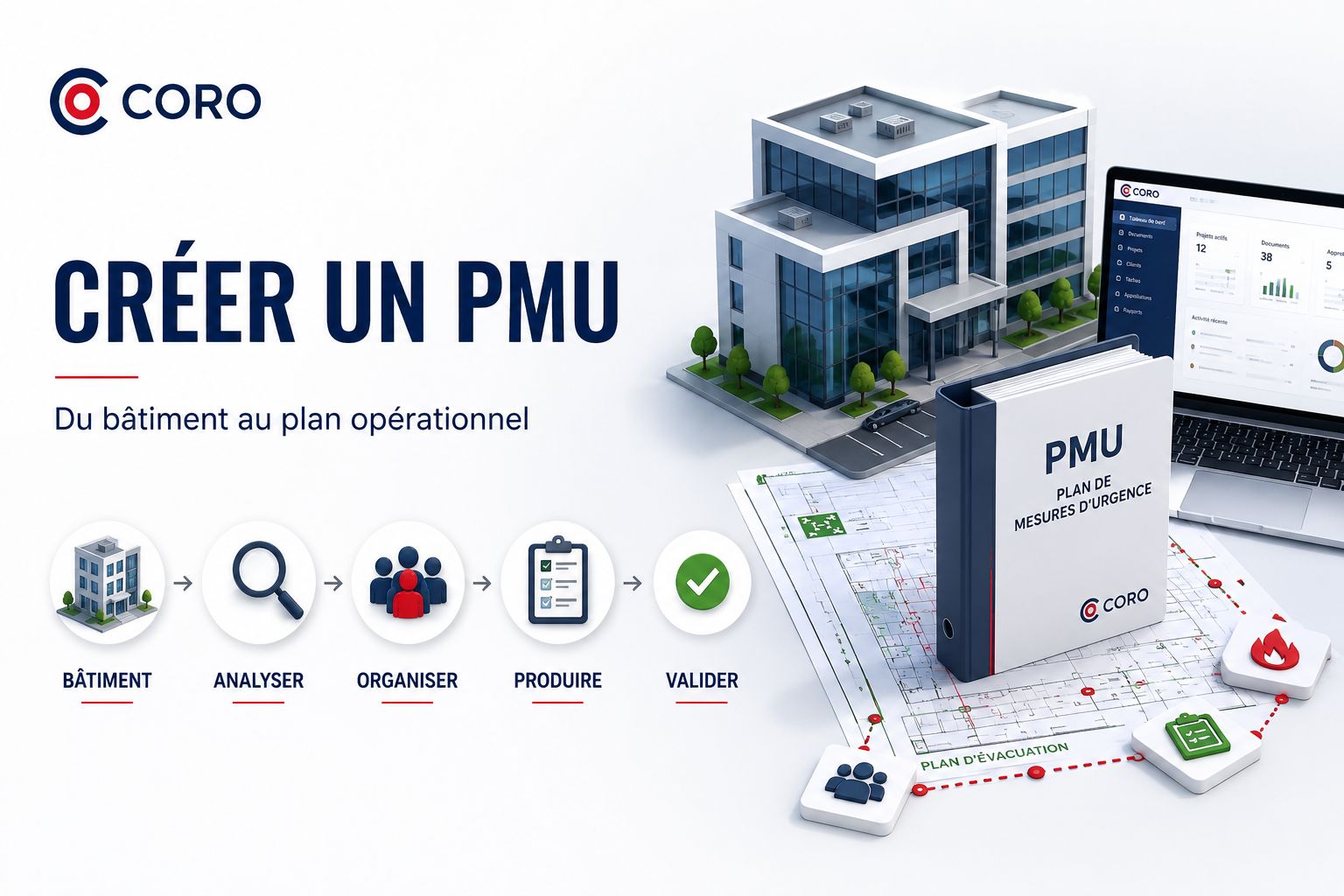
Creating an Emergency Response Plan for a business or facility involves much more than assembling a collection of procedures into a document. A professional emergency plan should reflect the actual facility, the hazards the organization may face, the resources available, the people expected to respond and the actions that must realistically be carried out when an emergency occurs.
This article focuses on professional and organizational emergency response plans for businesses, organizations and facilities. It is not intended as a guide to household or family emergency preparedness plans.
Developing an Emergency Response Plan can therefore be treated as a complete process: understand the environment, collect information, analyze hazards, define the emergency organization, develop procedures, review the result, obtain approval and maintain the document over time.
What Is an Emergency Response Plan?
An Emergency Response Plan is an organizational document that structures how an organization intends to respond to situations that may affect people, operations, a facility or organizational resources.
It may define emergency roles and responsibilities, communication mechanisms, response procedures, evacuation principles and the resources required during an emergency.
For a more detailed introduction to the concept, see our article What Is an Emergency Response Plan?
An Emergency Response Plan is not simply a document to produce. It should be understandable and usable by the people who may actually have to respond.
12 Steps to Create a Professional Emergency Response Plan
Define the Scope
Identify the facility, operations, occupants and boundaries of the plan.
Collect Information
Gather technical, organizational and operational information.
Visit the Facility
Verify information on site and understand the real operational environment.
Analyze Hazards
Identify the emergency scenarios that are actually relevant to the organization.
Define the Emergency Organization
Assign roles and responsibilities for emergency situations.
Develop Procedures
Turn emergency scenarios into clear and usable actions.
Adapt the Plan
Customize the content to the actual facility and organization.
Structure the Document
Organize information so it can be consulted efficiently.
Perform Quality Control
Review the content before presenting it to the client.
Obtain Client Approval
Address feedback and obtain approval of the final version.
Test the Plan
Challenge assumptions through drills and exercises.
Maintain the Plan
Review and update the plan as the organization or facility changes.
1. Clearly Define the Scope of the Emergency Response Plan
Before writing begins, it is important to determine exactly what the plan is intended to cover.
The scope may appear obvious when a single building is involved, but several questions should still be clarified.
- Which building or facility is covered?
- What operations take place there?
- Who occupies or uses the facility?
- Which occupancy periods must be considered?
- Are several organizations or tenants involved?
- What emergency documents already exist?
- Which systems and resources are available during an emergency?
- What boundaries or limitations should be clearly established?
This step helps prevent the plan from becoming too generic or, conversely, from addressing elements that do not reflect the organization's actual environment.
2. Collect the Required Information
The quality of an Emergency Response Plan depends directly on the quality of the information used to produce it.
Information gathering can include several categories.
Facility
Address, occupancy, floors, access points, exits, technical rooms, facility characteristics and available plans.
Systems
Fire alarm, sprinklers, ventilation, emergency power, communication systems, elevators and other relevant equipment.
Organization
Responsible personnel, teams, contact information, decision-making structure and internal resources.
Hazards
Hazardous materials, specialized installations, critical activities, natural hazards and technological risks.
Information found in an older document should not automatically be assumed to remain accurate. Information gathering should also serve as a verification and updating process.
3. Conduct a Facility Visit
For a building-specific Emergency Response Plan, document review alone does not always provide a complete understanding of the operational environment.
A site visit allows available information to be compared with what actually exists at the facility.
Access & Evacuation
Exits, stairs, evacuation routes, emergency service access and physical obstacles.
Equipment
Protection systems, communication devices and emergency response equipment.
Operational Reality
Occupancy, physical constraints, circulation, technical functions and specialized uses.
An existing document describes what was expected or observed at a particular point in time. A site visit helps verify what actually exists today.
4. Identify Relevant Hazards and Emergency Scenarios
Not every facility faces the same hazards, and not every organization requires exactly the same emergency procedures.
Depending on the context, an Emergency Response Plan may address scenarios such as:
Fire
Alert, alarm, initial response, evacuation and coordination with the fire department.
Medical Emergency
Emergency calls, access for responders, first aid and internal coordination.
Power Failure
Emergency systems, critical functions and decisions regarding continued occupancy or evacuation.
Gas or Hazardous Materials
Detection, isolation, evacuation and coordination with specialized responders.
Security Threats
Threatening individuals, active threats, suspicious packages or other security events.
Natural Hazards
Flooding, severe winds, extreme heat, winter storms or other applicable events.
A good Emergency Response Plan is not the one with the largest number of procedures. It is the one that properly addresses the situations that are genuinely relevant to the organization.
5. Define the Emergency Organization
A procedure cannot be fully operational if nobody knows who is expected to carry it out.
The Emergency Response Plan should therefore clearly define the organization responsible for the various emergency functions.
Depending on the facility and organizational structure, this may include:
- an emergency coordinator;
- an emergency response team;
- floor or area representatives;
- evacuation personnel;
- technical personnel;
- people responsible for communications;
- people assigned to receive emergency services;
- other specialized roles required by the facility.
A procedure without an assigned responsibility remains largely theoretical. Each important function should be connected to an identifiable person or role.
6. Develop Procedures That Can Actually Be Used
An emergency procedure should allow a person to understand quickly what needs to be done.
It should therefore do more than explain the hazard. It should transform the situation into a clear sequence of actions.
The exact structure may vary depending on the scenario, but the principle remains: the procedure should guide action.
This distinction connects directly with another important question: Is a compliant emergency plan necessarily operational?
7. Adapt the Emergency Plan to the Facility and Organization
Templates are useful for structuring the work.
They become problematic when they replace analysis.
Two office towers may have different systems, organizational structures, operating schedules, occupant profiles and physical constraints.
The same principle applies to industrial, commercial, institutional and other types of facilities.
A template should provide structure, not replace customization. Copying an existing emergency plan and simply replacing the client's name does not ensure that the procedures match the new facility.
This is also why distinguishing between different types of documents is important. See our article Emergency Response Plan vs Fire Safety Plan: What Is the Difference?
8. Structure the Document for Practical Use
Once the information has been collected and the procedures developed, the document itself should be organized logically.
An Emergency Response Plan structure may include:
Context
Facility overview, scope of the plan and general information.
Emergency Organization
Structure, roles, responsibilities and coordination mechanisms.
Procedures
Actions for the applicable emergency scenarios.
Evacuation
Principles, responsibilities, routes, assembly areas and special needs.
Communications
Alerting systems, internal communications and communications with emergency services.
Appendices
Plans, contact lists, registers and other supporting information.
9. Perform Quality Control Before Delivery
An Emergency Response Plan can appear complete while still containing inconsistencies, contradictory information or elements requiring validation.
Internal review can help verify:
- overall document consistency;
- alignment between roles and procedures;
- accuracy and consistency of contact information;
- absence of contradictory information;
- quality of emergency procedures;
- operational logic;
- completion of required elements before delivery.
In organizations with multiple consultants, this stage can also take the form of a formal peer-review process.
10. Submit the Emergency Response Plan for Client Review
The consultant's first completed version is not necessarily the final version.
The client may need to verify information, confirm responsibilities or request adjustments.
This process may involve several review cycles before the final version is approved.
To explore this stage in more detail, see How to Simplify Client Document Review and Approval .
11. Test the Emergency Response Plan Through Exercises
An Emergency Response Plan is developed from information, analysis and assumptions about how the organization is expected to respond.
Exercises allow some of these assumptions to be tested against reality.
Understanding
Do participants actually understand their roles?
Communication
Can the planned communication methods transmit information quickly enough?
Coordination
Are responsibilities clear when several people or teams are involved?
Realism
Can the planned procedures actually be carried out within the facility?
An Emergency Response Plan that has never been tested through an exercise remains, in part, an assumption about how the organization will respond.
Lessons identified during exercises can then feed into future plan updates.
12. Keep the Emergency Response Plan Up to Date
An Emergency Response Plan should not be considered permanently complete once it has been delivered.
Over time, many elements may change:
- responsible personnel;
- contact information;
- tenants or occupants;
- building systems;
- internal procedures;
- layouts;
- equipment;
- hazards;
- organizational requirements.
This is why we also address why emergency plans become outdated .
Creating the Emergency Response Plan is a project. Maintaining it is an ongoing process.
Can Emergency Response Plan Development Be Automated?
Yes, but it is important to distinguish between what can be automated and what still requires professional analysis.
What Can Be Automated
Document structure, data reuse, generation of selected sections, formatting, checks, workflows and repetitive operations.
What Requires Judgment
Site analysis, understanding hazards, determining procedure relevance, adapting the plan to the facility and professional validation.
The purpose of automation is not to replace the professional. It is to reduce time spent on repetitive operations so more time can be dedicated to analysis and quality.
We explore this distinction further in Automating Emergency Response Plan Production .
Word Processor, Emergency Plan Generator or Specialized Platform?
The appropriate approach depends on factors such as document volume, number of facilities, project complexity and the number of people involved.
Word Processor
May be appropriate for occasional production when a professional already controls the document structure and follow-up process.
Plan Generator
Can accelerate document production by using structured information.
Specialized Platform
Can manage the document together with the project, versions, reviews, approvals and ongoing maintenance.
For a more detailed comparison, see our guide Emergency Response Plan Software: How to Choose the Right Platform .
Creating an Emergency Response Plan With a Platform Like CORO
A specialized platform makes it possible to treat the Emergency Response Plan as the result of a complete lifecycle rather than as an isolated file.
CORO connects this process to four operational cycles.
Produce
Structure data and produce compliance documents.
Manage
Track projects, activities, responsibilities, deadlines and hours.
Measure
Transform project data into useful operational indicators.
Collaborate
Extend the workflow to client review and approval.
Our Emergency Response Plan page explains how CORO supports this document type in more detail.
CORO's project and mandate management environment then connects the document to the operational work required to produce it.
Creating an Emergency Plan Means Documenting the Ability to Act
The quality of an Emergency Response Plan should not be judged only by its number of pages or the quality of its formatting.
Its real value appears when the people involved can quickly understand:
- what is happening;
- who must make decisions;
- who must respond;
- what actions must be performed;
- how information should be communicated;
- how occupants should be protected;
- how available resources should be coordinated.
An effective Emergency Response Plan is not simply a document about emergencies. It describes how an organization intends to act when an emergency actually occurs.
FAQ — Creating an Emergency Response Plan
How do you create an Emergency Response Plan?
Developing a professional Emergency Response Plan generally includes defining the scope, collecting information, assessing the facility and hazards, defining emergency roles, developing procedures, performing quality control, obtaining client approval, conducting exercises and maintaining the plan over time.
What should an Emergency Response Plan contain?
The exact content depends on the facility and organization, but it may include facility information, the emergency organization, roles and responsibilities, communications, emergency procedures, evacuation principles, available resources, technical information and supporting appendices.
Can you use an Emergency Response Plan template?
A template can be useful for structuring the document and promoting consistency. However, it should be adapted to the facility, hazards, operations and organization. A generic template does not replace analysis of the actual environment.
Can an Emergency Response Plan be created automatically?
Some parts of the process can be automated, including data structuring, integration of selected information and document generation. Professional analysis of the facility, hazards and procedure relevance remains essential.
Is a facility visit necessary when developing an Emergency Response Plan?
For a building-specific plan, a site visit helps verify available information and understand elements that may be difficult to assess from documents alone, including access, evacuation routes, systems, physical constraints, occupancy and operational conditions.
What is the difference between an Emergency Response Plan and a Fire Safety Plan?
The documents may contain overlapping elements but do not necessarily have the same scope. An Emergency Response Plan typically addresses multiple emergency scenarios, while a Fire Safety Plan focuses specifically on fire safety measures and procedures. See Emergency Response Plan vs Fire Safety Plan: What Is the Difference? for a more detailed comparison.
How often should an Emergency Response Plan be updated?
The appropriate frequency depends on the organization, but the plan should generally be reassessed when changes affect the facility, responsibilities, occupants, systems, procedures or hazards. Exercises and actual incidents may also identify required improvements.
Is a compliant Emergency Response Plan necessarily operational?
Not necessarily. Compliance and operational effectiveness are different dimensions. A document may contain expected elements while still being difficult to apply if its roles, procedures or actions do not sufficiently reflect the actual facility.
Structure the Complete Emergency Response Plan Lifecycle
CORO centralizes client and facility data, document production, project management, reviews, approvals and ongoing plan maintenance within the same environment.